

🐾 Tracks & Signs Identification Guide
Charlotte’s Favourite Sign
“I always love spotting otter spraints along the riverbank — not for the smell, but because it means these elusive animals are thriving here in the Wye Valley.”
🌟 Share Your Spotting
If you notice tracks, droppings, or other wildlife signs during your stay, let us know! With your permission, we’d love to feature your discovery in our Spotter’s Log or future updates of this guide.
Introduction
Wildlife in the Wye Valley is often shy or nocturnal, but it leaves behind clues. From footprints in mud to chewed nuts, burrows, and feathers, these signs tell the story of the animals living alongside us at Reddings Retreat.
This guide is updated from time to time as guests share their discoveries. Photos are a work in progress and will be added as and when they are received from guests and local photographers.
🦡 Mammal Tracks & Signs
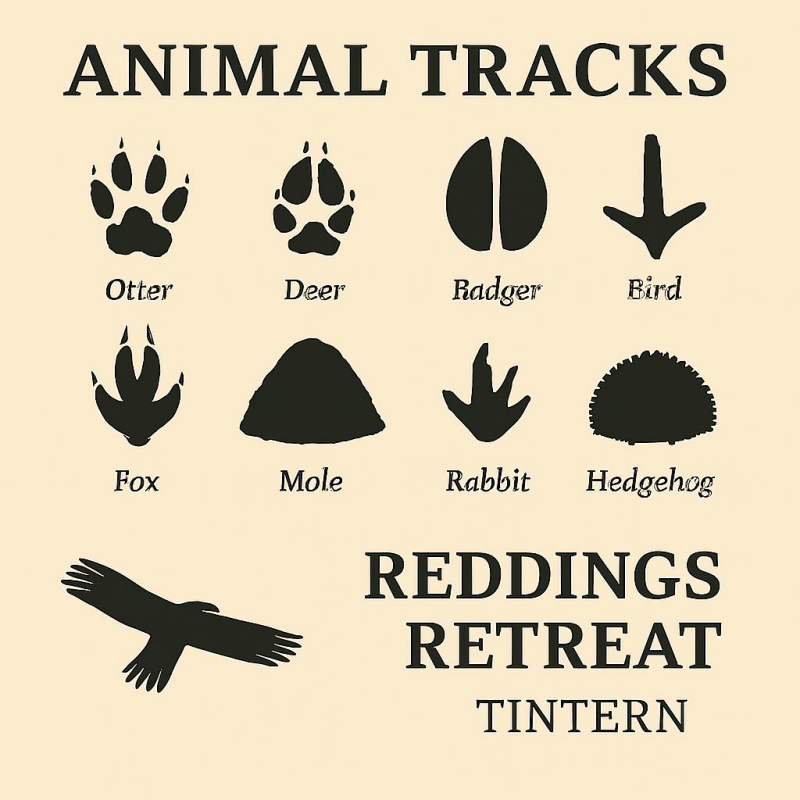
Badger
-
Broad, 5 toes with long claw marks, ~6.5 cm wide.
-
Latrines (small pits with droppings), well‑worn paths, snuffle holes.
Fox
-
Four toes, oval pad, ~5 cm long, often in straight lines.
-
Scat twisted with fur or seeds, musky smell.
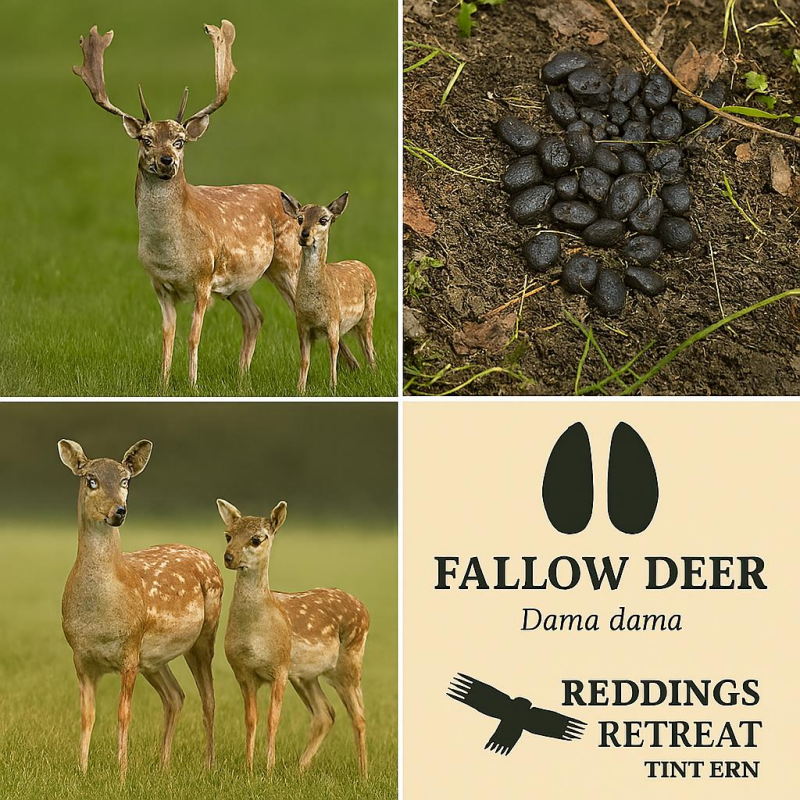
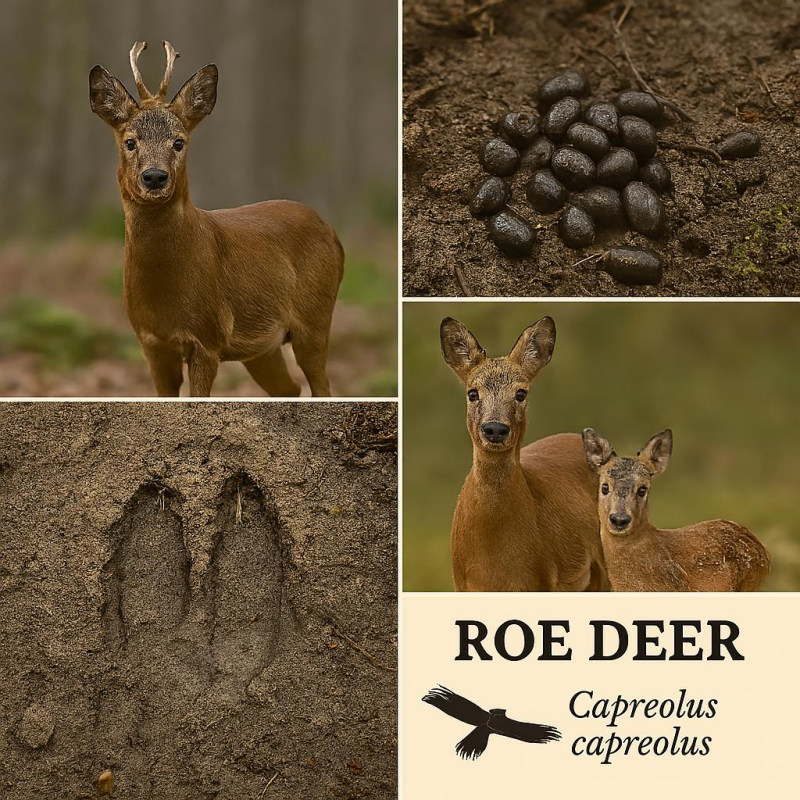
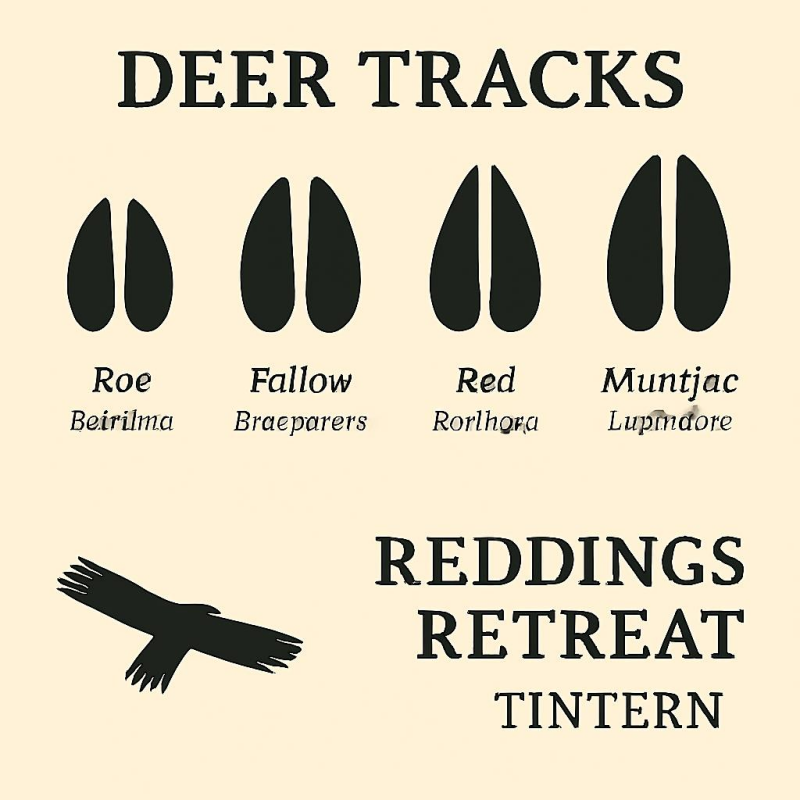
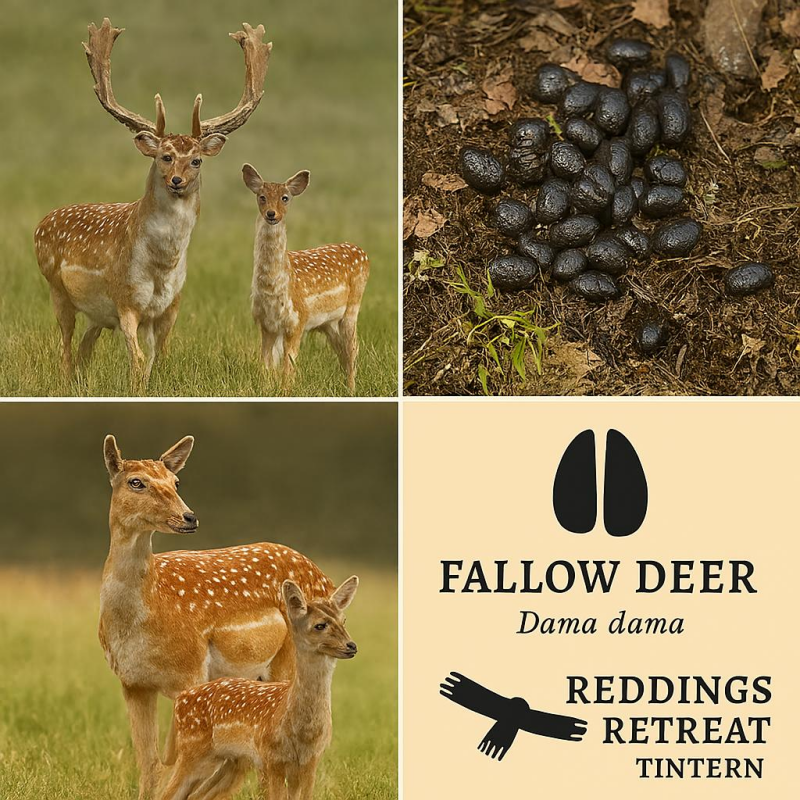
Deer (Fallow, Roe, Muntjac)
-
Cloven hooves, upside‑down heart shape.
-
Browsed shoots, bark stripping, slots in mud.
Wild Boar (Forest of Dean, near Tintern)
-
Tracks: Cloven hoof prints, rounder and broader than deer, often with dew claws.
-
Signs: Rooting patches, wallows, muddy rubbing posts.
-
Tip: Cross the Wireworks Bridge from Tintern and you step straight into the Forest of Dean, where boar signs are common.
-
Safety: Shy but can be defensive, especially sows with piglets — always observe from a distance.
-
Folklore: In Celtic tradition, wild boar symbolised courage and ferocity.
Otter
-
Webbed, 5 toes, ~9 cm long.
-
Spraints (droppings) with fishy smell, often on riverside rocks.
Hedgehog
-
Small, ~2–3 cm, five toes.
-
Droppings with insect remains, tunnels in undergrowth.
Rabbits & Hares
-
Hind feet larger than front, often paired.
-
Burrows (rabbits), shallow scrapes (hares), round pellets.
Squirrels
-
Four toes front, five back, ~3–4 cm.
-
Split hazelnuts (clean cut = squirrel, jagged = mouse).
Polecat
-
Scats with strong musky odour, often left on tracks.
-
Tracks ~3–4 cm, similar to stoat/weasel but larger.
Pine Marten (rare, but recorded in Forest of Dean)
-
Scats with berries, left on prominent features.
-
Tracks: five toes, ~3–5 cm, bounding gait.
Dormouse
-
Neatly gnawed hazelnuts (perfectly round hole with smooth edges).
-
Rarely seen, but nut signs are distinctive.
Mole
-
Fresh molehills in meadows and lawns.
-
Tracks rarely seen, but soil disturbance obvious.
🦉 Bird Signs
-
Woodpecker – oval holes in deadwood, wood chips at base of trees.
-
Buzzard/Red Kite – plucking posts with feather remains.
-
Peregrine Falcon – feather “explosions” on cliff ledges (noted in Spotter’s Log).
-
Owl Pellets – grey, furry pellets with bones under roost trees.
-
Droppings – white splashes under perches.
🦆 River & Wetland Signs
-
Heron – large three‑toed prints in mud.
-
Kingfisher – white droppings on riverside perches.
-
Dragonflies – empty larval cases clinging to reeds.
-
Duck/Goose/Swans – webbed three‑toed prints.
🦇 Highlight: Bat Spotting
📍 Wye Valley Greenway Tunnel & Reddings Retreat
-
The Tidenham Tunnel on the Wye Valley Greenway is home to lesser and greater horseshoe bats.
-
The tunnel is specially managed with low‑level lighting and seasonal closures (open April–September, daytime only).
-
At Reddings Retreat, bats are spotted almost nightly in summer, swooping over the meadow and riverbank at dusk.
-
Signs: Droppings under roost entrances (crumbly, insect fragments).
-
Tip: Best time is just after sunset — stand quietly in the meadow or by the riverbank.
🐍 Amphibians & Reptiles
-
Frog/Toad Spawn – clumps (frogs) vs strings (toads) in ponds.
-
Grass Snake – shed skins near compost heaps or sunny banks.
-
Slow Worm – shiny shed skins under logs or stones.
🐝 Invertebrates & Insects
-
Molehills – fresh soil mounds in meadows.
-
Ant Hills – small mounds in grassland.
-
Beetle Bore Holes – tiny round holes in deadwood.
-
Butterfly Caterpillar Feeding Signs – chewed nettles, thistles, or meadow plants.
🌟 Tips for Spotting Tracks & Signs
-
Best ground: Mud, sand, or snow shows tracks most clearly.
-
Light: Early or late in the day, shadows make prints stand out.
-
Size matters: Carry a coin or ruler to compare.
-
Patterns: Look for repeated trails or feeding stations.
⚠️ Etiquette & Disclaimer
-
Please observe tracks and signs without disturbing animals or habitats.
-
Never handle droppings or pellets without gloves.
-
Reddings Retreat cannot accept responsibility for any adverse effects from misuse of this guide.
📚 Further Resources
-
The Wildlife Trusts – Identify Tracks (wildlifetrusts.org)
-
Collins Field Guide to Animal Tracks and Signs – Lars‑Henrik Olsen.
-
Mammal Society – www.mammal.org.uk
🌿 Final Note
We hope this guide helps you uncover the hidden wildlife stories of the Wye Valley during your stay at Reddings Retreat. If you capture a photo of a footprint, feather, or other sign, feel free to share it on social media and tag us, or send it directly to Charlotte — we’d love to celebrate your discovery and, with your permission, feature it in our Spotter’s Log or future guide updates.
Create Your Own Website With Webador